Becoming an Online Instructor: The Guide to Success
You master a subject and enjoy passing it on? As an online instructor, you can share your expertise and earn income from it. Here are the key steps, from the course idea to your first sales.
Why Become an Online Instructor Now
Developer, designer, accountant or fitness coach: every profession holds know-how that other people want to acquire. Training platforms have removed most of the technical barriers. You no longer need your own website, video server or payment system.
Working as an online instructor is still a real project, though. A useful course takes preparation, rigor and a little marketing. The steps below help you avoid the most common mistakes.
1. Identify Your Niche
A topic that is too broad drowns you in competition. It is better to become the go-to reference in a specific area. Ask yourself three questions:
- Which expertise do you truly master? The one your colleagues come to you for
- What concrete problem do you solve? A course that fixes a specific problem sells better than a general one
- Is there demand? Check Google Trends, forums and the questions people ask on LinkedIn
Examples of well-targeted niches:
- "React for backend developers" rather than "Learn JavaScript"
- "UX design for SaaS applications" rather than "Learn design"
- "Technical SEO for e-commerce sites" rather than "Digital marketing"
2. Structure Your Curriculum
A good course follows a logical progression, from simple to complex. To stand out as an online instructor, rely on a proven framework such as the ADDIE method:
| Step | Description | Deliverable |
|---|---|---|
| Analysis | Identify learner needs | Learner profile |
| Design | Define learning objectives | Course plan |
| Development | Create the content | Videos, exercises |
| Implementation | Publish and distribute | Available course |
| Evaluation | Measure and improve | Feedback, statistics |
Aim for short sections, each focused on a concrete result. At the end of every section, students should know what new thing they can do.
3. Produce Quality Content
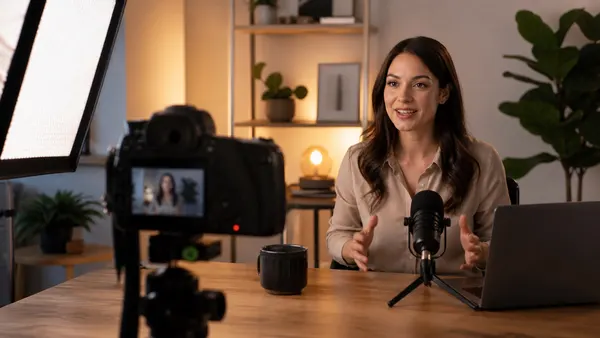
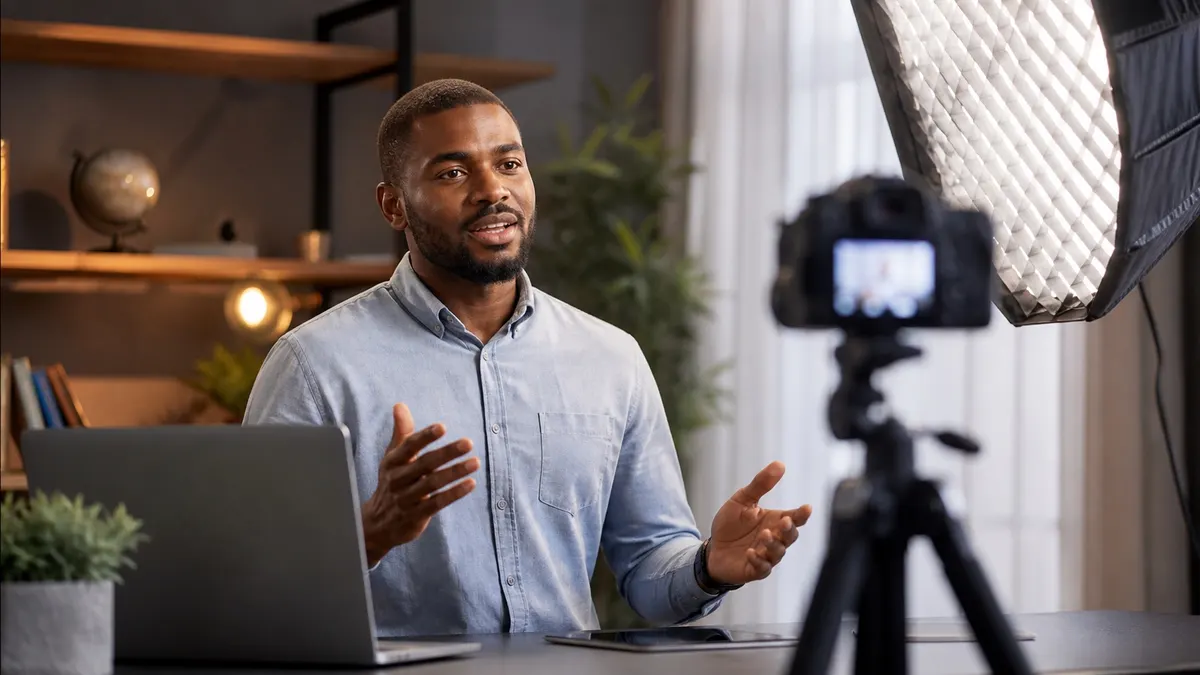
You do not need a professional studio, but a minimum level of quality remains essential.
Sound first:
- A good USB microphone is enough to start
- Record in a quiet room without echo (curtains, rugs, bookshelves)
- Poor sound makes students drop off faster than an average picture
Picture:
- A high-resolution screen for screen recordings
- Natural light facing you, or a soft lamp
- OBS Studio, which is free, to record your screen and camera
Content:
- Lessons of 5 to 15 minutes
- One concept per lesson
- A practical exercise after each section
Our guide to creating an engaging video course covers filming and editing in detail.
4. Engage Your Students
A successful online instructor does more than publish videos. The best ones support their students:
- Answer questions quickly
- Offer live Q&A sessions
- Ask for feedback and improve your lessons accordingly
- Update the course when your topic evolves
Being an online instructor therefore also means leading a group. A supported student is more likely to finish the course and recommend it.
5. Set Your Price and Monetize
Several revenue models exist:
- One-off sale: a fixed price per course, the simplest model to start with
- Subscription: access to your whole catalog for a monthly payment
- Freemium: free lessons to convince, then paid modules
- Coaching: one-to-one support on top of the course
Tip: start with an accessible price to collect your first reviews, then raise it as the course grows richer. As an online instructor on Mudey, you set and adjust your own prices.
6. Promote Your Course
An excellent course nobody sees does not sell. Work on several channels:
- SEO for your course page, with a clear title and a precise description
- Free content on YouTube or a blog to show your expertise
- LinkedIn for a professional audience, Instagram or TikTok for the general public
- A newsletter that delivers value before it sells
Becoming an Online Instructor on Mudey
On Mudey, activating an instructor account is free. The course studio brings together video hosting, quizzes, coupons and statistics. You stay in control of your prices.
To get going, visit the page for instructors and draft the outline of your first course.
Conclusion
Becoming an online instructor takes time, but it can transform your career. Start small, publish a focused first course and improve it with your students' feedback. Your first course will not be perfect, and that is fine: it will teach you how to make the next one better.
Ready to put it into practice?
Browse the Mudey catalog and progress at your own pace, with a certificate at the end.
Browse the catalog